
Spray Foam Insulation
Spray foam for commercial applications where insulation and air sealing need to be addressed in the same installation step - particularly in metal buildings and around complex penetrations.
Learn more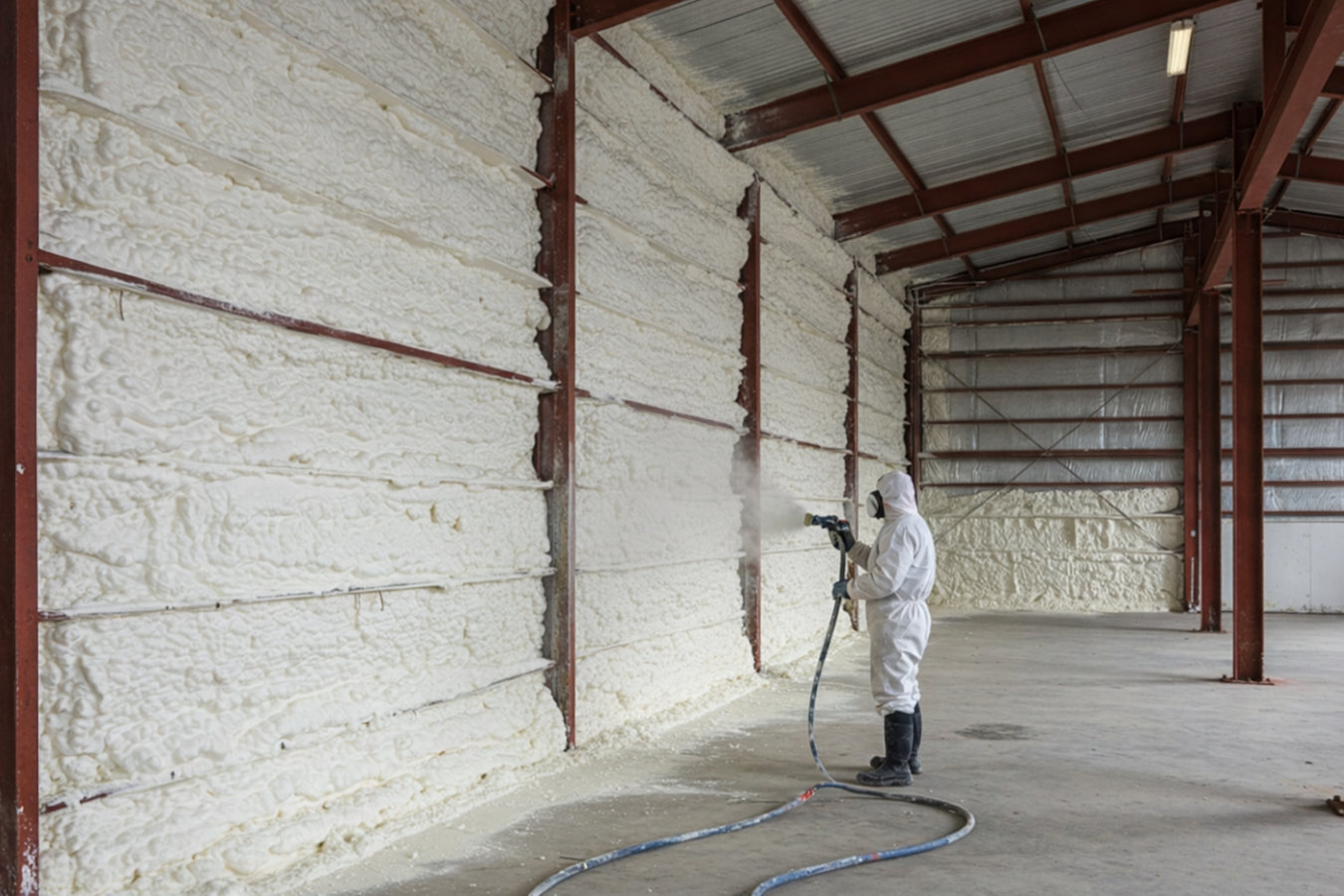
Your Duluth commercial building is losing heat through walls, ceilings, and old insulation that has failed. We install the right materials in the right places so your building meets code and your heating bills finally reflect what you are actually using.
Commercial insulation in Duluth slows heat from moving through your building's walls, roof, and floors - keeping the warmth you are paying for inside in winter and the heat out in summer. Most commercial projects are completed in one to three days and can happen while your business stays open, since the work takes place in attic spaces, above drop ceilings, or in wall cavities rather than in occupied areas.
Duluth's long heating season - running from October through April - means a commercial building with underperforming insulation pays to heat the outdoors for six or seven months a year. That adds up fast. Many Duluth commercial buildings, especially those along Superior Street and in the Canal Park and Lincoln Park areas, were built in the early to mid-20th century with little or no insulation by today's standards. Adding insulation to these buildings is the single most reliable way to bring energy costs under control.
If your building also has air leakage problems - drafts near doors, windows, or electrical penetrations - pairing this work with spray foam insulation gives you insulation and air sealing in the same material and the same installation step, which is often the most efficient approach for older commercial spaces.
If your energy costs have been creeping up year over year and you have not expanded your space or changed your hours, failing insulation is one of the most common causes. In Duluth's long heating season, even a modest drop in insulation performance can translate into hundreds or thousands of dollars in extra heating costs annually.
If one part of your building is always colder than the rest - even with the heat running - that is a strong sign that insulation has failed or was never adequate in that area. In older Duluth commercial buildings, this often shows up in corner offices, spaces below flat roofs, or rooms on the north-facing side where wind exposure is greatest.
Frost or persistent condensation on interior walls or ceilings during Duluth's cold months means warm indoor air is meeting a surface that is too cold - which means the insulation between that surface and the outside is not doing its job. Left unaddressed, this moisture can lead to mold and structural damage over time.
Most commercial buildings constructed before the 1990s were built to standards far below what is required today and what is needed to manage heating costs in Duluth's climate zone. If you have owned or occupied the building for years without ever having the insulation evaluated, there is a real chance you are losing significant heat every winter without realizing it.
We install spray foam, blown-in loose fill, and rigid board insulation across commercial buildings throughout the Duluth area, selecting the right material for each part of the building rather than defaulting to one product for everything. Spray foam is used where both insulation and air sealing need to happen in the same step - particularly around penetrations, at the roofline, and in areas where moisture exposure is a concern. Blown-in cellulose and fiberglass work well in accessible attic spaces and above drop ceilings. Rigid board is suited to flat roof assemblies and below-grade walls where compressive strength matters alongside thermal performance. Every job is designed to meet or exceed Minnesota's commercial energy code requirements for Duluth's climate zone, and permitted work is inspected by the city. We can also coordinate commercial work with closed-cell foam insulation where high R-value per inch is a priority in spaces where depth is limited.
For property owners managing both commercial and residential buildings, we handle both under the same contractor relationship. Connecting this work with spray foam insulation for your residential units gives you one point of contact, one assessment process, and one contractor who knows every property in your portfolio.
Best for buildings where insulation and air sealing need to happen together - particularly in metal buildings, around penetrations, and in areas with moisture or condensation concerns.
Suited to attic spaces and above suspended ceilings in retail, office, and warehouse settings where depth is available and the area is already accessible.
Ideal for flat roofs, basement walls, and applications where insulation needs to be installed against a structural surface without a cavity to fill.
Duluth sits in one of the coldest climate zones in the continental United States, with average January temperatures well below zero and heating seasons that stretch from October through April. This means commercial buildings here need significantly more insulation than a similar building in Minneapolis or Chicago. A contractor who quotes you based on national averages without accounting for Duluth's specific climate zone requirements may be substantially underselling what your building actually needs to perform. Duluth's position on the western tip of Lake Superior also means buildings face persistent wind and moisture exposure that accelerates heat loss through walls and roofs - air sealing alongside insulation is especially important here.
Much of Duluth's commercial district - along Superior Street and in the Canal Park and Lincoln Park neighborhoods - is made up of buildings constructed in the early to mid-20th century with little or no insulation by today's standards. Some contain older materials that require careful handling before new insulation can be installed. Duluth's freeze-thaw cycles also accelerate degradation in older insulation - sometimes 40 or 50 degree temperature swings in a single shoulder-season day can cause older material to shift, compress, or open gaps over time. Minnesota Power offers commercial rebates for insulation upgrades that can meaningfully offset project costs for Duluth businesses.
We work with commercial building owners throughout the greater Duluth area, including Superior, WI and Cloquet, MN, where commercial buildings face the same cold-climate demands and the same older building stock conditions as Duluth proper.
We reply within one business day. We will ask about your building size, age, and what is prompting the call - this helps us come prepared for the site visit. Demand spikes in early fall when building owners start thinking about the heating season, so earlier is better for scheduling.
We walk your building - including attic spaces, mechanical rooms, and accessible wall cavities - to evaluate what is currently there and where the biggest gaps are. In older Duluth buildings, this step sometimes turns up materials that need careful handling before new insulation can go in. A thorough assessment is the foundation of an accurate quote.
You receive a written proposal with the full scope, materials, timeline, and cost. If the project requires a building permit - which is common for commercial insulation work in Duluth - we explain this upfront and handle the permit ourselves. We also flag any Minnesota Power commercial rebates or federal incentives that apply to your project.
Most commercial jobs take one to three days. We clean up daily, and before we leave for the last time, we walk you through the completed work - showing you what was installed, where we found unexpected conditions, and what to watch for going forward. If a permit inspection is required, we coordinate the schedule directly.
We walk your building in person before quoting. No phone estimates, no surprises on the invoice. Reply within one business day.
(218) 514-1692Duluth is in one of the coldest climate zones in the country, and Minnesota's commercial energy code reflects that with higher minimum insulation requirements than warmer cities. We design every commercial project to meet those requirements - and we explain exactly why the specified levels are what they are, rather than defaulting to what is fastest or cheapest to install.
Commercial insulation work in Duluth requires a building permit, and the finished work is inspected by the city. We handle the permit process and coordinate the inspection schedule directly with the City of Duluth Building Safety Division - so you do not have to track that separately. The inspection is your independent confirmation that the work meets code.
Minnesota Power serves most of the Duluth area and offers commercial energy efficiency rebates for qualifying insulation and air sealing upgrades. We are familiar with the current program requirements and help clients capture available incentives as part of the project, not as an afterthought. Federal incentives for commercial energy efficiency improvements can be stacked on top in many cases.
A significant portion of Duluth's commercial building stock dates to the early-to-mid 20th century - masonry, brick, and stone construction with unusual wall assemblies and older materials that sometimes need careful handling before new insulation can go in. The North American Insulation Manufacturers Association sets the installation standards we follow for these situations. We assess honestly and scope accordingly rather than discovering surprises mid-project.
These points add up to a simple promise: we treat your commercial building the way we would want ours treated. You get an honest assessment, a written quote that covers everything, work that passes inspection, and a contractor you can reach if questions come up after the job is done.
For Minnesota commercial energy code requirements, the Minnesota Department of Labor and Industry - Energy Code is the authoritative source. For permit and inspection requirements specific to Duluth, see the City of Duluth Building Safety Division. For commercial rebate programs, check Minnesota Power Business Energy Efficiency.
Spray foam for commercial applications where insulation and air sealing need to be addressed in the same installation step - particularly in metal buildings and around complex penetrations.
Learn moreHigh-density closed-cell foam for commercial spaces where maximum R-value per inch is required and moisture resistance is a priority alongside thermal performance.
Learn moreDuluth's heating season starts in October and does not let up until April - getting your assessment done now means your building is ready before the coldest months arrive and you avoid the fall rush.