
Home Insulation
A full-home insulation review looks at attics, walls, crawl spaces, and rim joists together - so no heat-loss path gets missed.
Learn more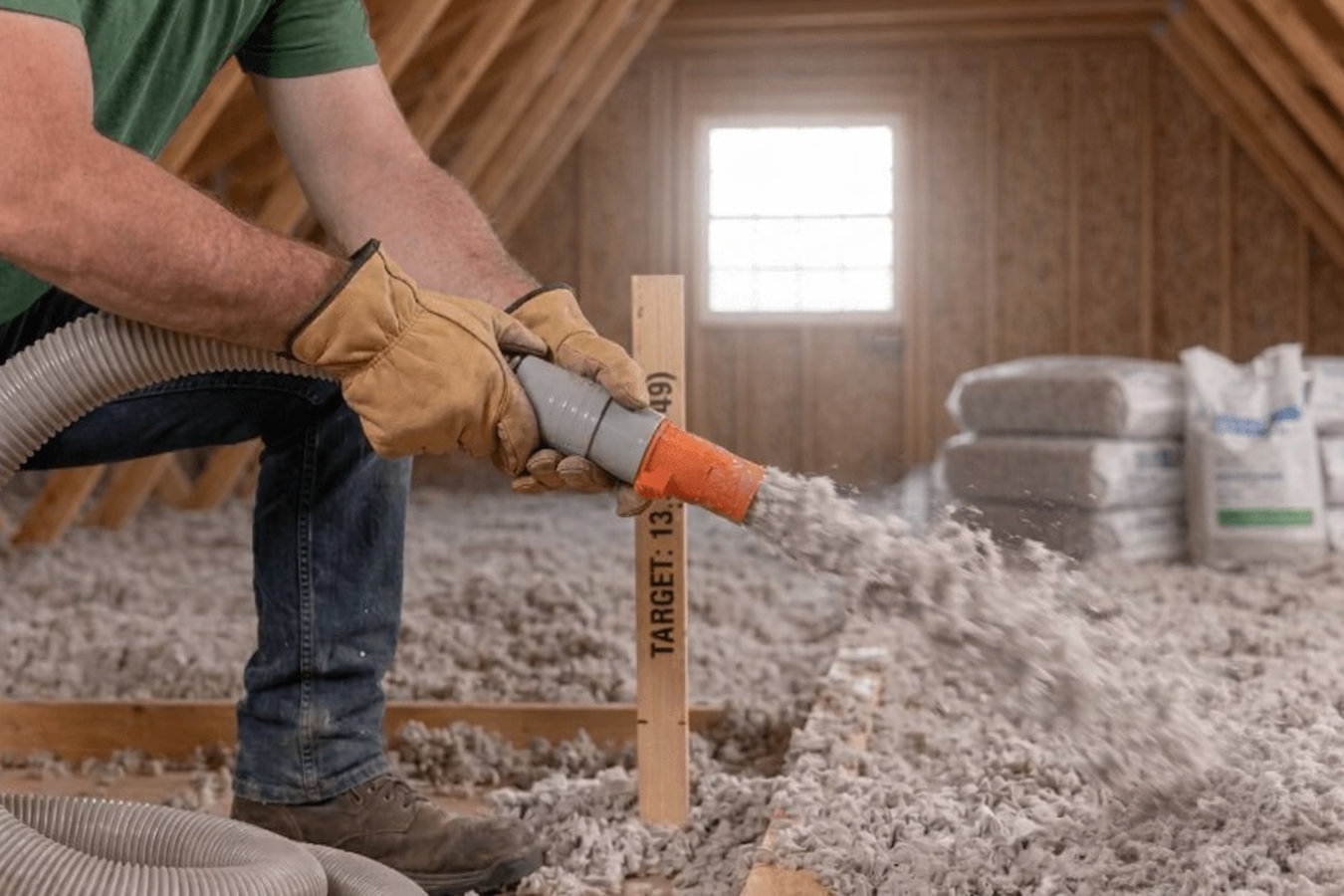
Rising heating bills and recurring ice dams are signs your attic needs attention. We fill your attic to the full depth this climate demands and leave depth markers so you can verify the result yourself.
Blown-in insulation in Duluth, MN fills your attic with loose cellulose or fiberglass material blown in through a hose - covering every corner and cavity that rigid batts cannot reach. Most residential attic jobs take two to six hours from setup to cleanup.
Duluth sits in one of the coldest climate zones in the continental United States. Average January lows hover around -3°F, and the heating season stretches from October well into April. The Department of Energy recommends attic insulation between R-49 and R-60 for this zone - roughly 16 to 20 inches of blown-in material. Most older Duluth homes have a fraction of that, which means their furnaces work harder than they need to every single day.
If your concern goes beyond the attic and covers exterior walls as well, our home insulation service takes a whole-home approach - assessing every area where heat is escaping and prioritizing the upgrades that deliver the most return for your budget.
If your gas or electric bill keeps rising but your habits have not changed, heat escaping through an under-insulated attic is one of the most common causes. Duluth's long heating season means even modest heat loss adds up to hundreds of dollars a year. The longer you wait, the more it costs.
Those thick ridges of ice along your roof edge form when heat from your attic warms the roof deck, melts snow, and refreezes at the cold eaves. If you have seen ice dams in the past two winters, your attic insulation is almost certainly part of the problem. Blown-in insulation paired with air sealing is the most effective long-term fix.
If bedrooms or rooms directly under the roofline feel drafty and hard to keep warm, the insulation above them is likely too thin or unevenly distributed. This is especially common in Duluth's older hillside homes, where insulation has compressed over decades. A quick attic check usually confirms the issue.
If you peek into your attic and can see the wooden beams running across the floor, your insulation is not deep enough for a Duluth winter. In a properly insulated attic, the material should cover those joists completely. This is a fast visual check any homeowner can do themselves before calling a contractor.
We install both cellulose and fiberglass blown-in insulation in attic floors and existing wall cavities. Cellulose is made from recycled paper treated to resist fire and pests - it covers irregular spaces thoroughly and is a practical choice for Duluth attics with complex rooflines. Fiberglass holds its shape well over time and suits homeowners who want long-term depth stability. Before any material goes in, we seal air leaks around light fixtures, plumbing penetrations, and the attic hatch - because insulation without air sealing delivers far less of the energy savings you are paying for. For older homes where exterior wall cavities have never been touched, our wall insulation service uses dense-pack blown-in to fill those cavities without removing drywall.
Every job includes a written estimate with a specified target depth and R-value, depth verification during installation using rulers left in the insulation, and a post-job walkthrough so you can see the result. The U.S. Department of Energy recommends R-49 to R-60 for attics in this climate zone - that target is written into every quote we provide.
Made from recycled paper treated for fire resistance - a good fit for homeowners who prioritize sustainable materials and want thorough coverage in irregular attic spaces.
Spun glass fibers that hold their shape well over time, suited to attics where long-term depth retention is a priority.
The most common application - filling the attic floor to the full depth recommended for Duluth's climate zone.
Blown directly into existing wall cavities through small holes without removing drywall - an efficient retrofit for Duluth's older homes.
Duluth averages around 86 inches of snow a year and records some of the lowest winter temperatures of any major city in the continental United States. That combination puts constant pressure on attic insulation throughout a seven-month heating season. A large share of Duluth homes were built before 1970, when insulation standards were far less demanding - many of these attics have only 3 to 5 inches of original material, a fraction of what is needed to keep heating bills reasonable here. The hilly terrain and varied housing styles across the city - from 1890s Victorians on the East Hillside to mid-century ramblers near Miller Hill - also mean attic access and coverage challenges are different from one home to the next. Homeowners we serve in Hermantown often deal with straightforward open attic floors, while older homes closer to downtown can have knee-wall sections and cathedral ceilings that require different techniques.
Ice dams are a Duluth-specific concern that blown-in insulation directly addresses. When heat escapes through an under-insulated attic, it warms the roof deck, melts snow, and refreezes at the cold eaves - forcing water under shingles and into walls. Homes in Superior, WI face the same freeze-thaw cycle that Lake Superior's proximity creates, and we see ice dam damage there regularly as well. Proper blown-in insulation - combined with air sealing - is the most cost-effective long-term solution for this specific problem. Minnesota Power, which serves the Duluth area, offers rebates for qualifying insulation upgrades that can reduce your out-of-pocket cost.
We respond within 1 business day to schedule a free in-home estimate. Tell us the age of your home and any problems you have noticed - ice dams, cold rooms, or high bills - so we come prepared.
We measure your current insulation depth, check for air leaks around fixtures and the attic hatch, and look at ventilation. This visit usually takes 30 to 60 minutes and is the basis for an accurate written quote.
Your quote specifies the insulation type, the target depth, and the final R-value you will end up with. No vague totals - you know exactly what you are paying for before anything starts.
The crew seals air leaks first, then blows in insulation evenly across the attic floor, checking depth at multiple points. Most attic jobs are finished within a half-day. We leave depth markers in place so you can verify the result yourself.
Free estimate, written quote with target depth and R-value, no obligation.
(218) 514-1692Our crew works throughout Duluth, Superior, Hermantown, Cloquet, and 8 other communities in the region. Local crews mean no travel surcharges and shorter scheduling lead times.
Every estimate we provide lists the insulation type, the target depth in inches, and the final R-value you will reach. That detail lets you compare quotes fairly and holds us accountable to what we promised.
We seal gaps around light fixtures, plumbing penetrations, and the attic hatch before blowing in insulation. Skipping this step can cost you a meaningful share of the energy savings you paid for.
A large share of Duluth homes were built before 1960 and come with limited attic access, complex rooflines, or old wiring that needs attention first. We flag these issues during the assessment so nothing surprises you on install day.
Our written estimates and depth-verified installs give you an objective record of what was done - not just a handshake promise. Experienced local crews handle every job, so the coverage matches what your Duluth home actually needs.
A full-home insulation review looks at attics, walls, crawl spaces, and rim joists together - so no heat-loss path gets missed.
Learn moreDense-pack blown-in wall insulation fills existing cavities without tearing out drywall, making it a practical upgrade for older Duluth homes.
Learn moreFall appointments fill up fast in Duluth - reach out now and have a properly insulated attic ready before the first hard freeze.